
Making Warehouses Sustainable in 2026
Efficiency meets ecology: How modern WMS is cutting costs and carbon in 2026.

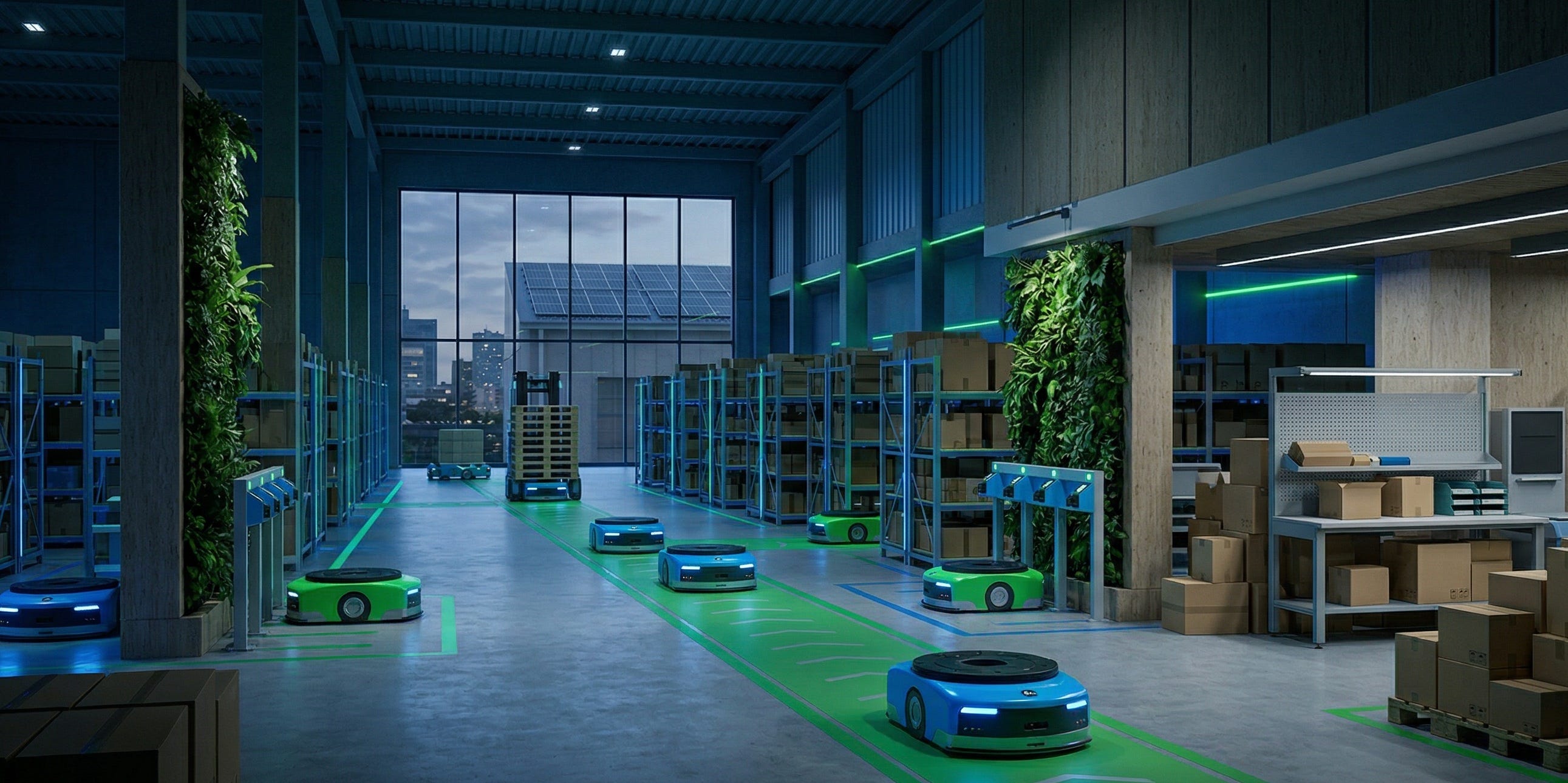
For a long time, running a warehouse was all about two things: how fast can we move it, and did we ship the right item? But as we progress through 2026, a new player has entered the room. Procurement teams aren’t just looking at the price tag anymore; they’re also asking about the “Carbon Per Order” (CPO).
Sustainability isn’t just a “feel-good” badge for a business anymore. It’s a core requirement. If you can’t prove you’re shipping efficiently, you might lose the contract. That’s why many businesses are leaning on Warehouse Management Systems (WMS) to act as the “brain” of their eco-friendly operations.
The “Green” Warehouse Checklist
Being a sustainable warehouse isn’t just about putting solar panels on the roof (though that helps). It’s about being smarter with the resources you already have. Here is how modern software is helping:
1. Energy Efficiency: Keeping it “Dark”
One of the easiest ways to save energy is to simply turn things off. A modern WMS can manage “dark warehouses.” These are automated sections where robots handle all the picking and heavy lifting. Since robots don’t need bright lights or a cozy 21°C to work, you can kill the lights and dial back the HVAC. This “lights-out” approach can slash your energy bills by as much as 25–40%.
2. Route & Load Optimization
Fuel is expensive, and burning it needlessly is bad for everyone. A smart WMS cuts out “empty miles,” which are those wasted trips where a forklift or a truck is moving nothing but air.
On the floor: The software finds the shortest path for your team, so they aren’t zig-zagging across the building.
On the road: It calculates exactly how to pack a trailer so there’s zero wasted space. Fewer “half-empty” trucks mean fewer trips, which saves money and the planet.
Simple Ways to Cut Waste
Packaging: No More “Air Shipping”
We’ve all had that annoying experience: ordering a tiny tube of lip balm and having it arrive in a box big enough for a microwave. In 2026, that’s a sign of a messy operation. Modern WMS tools use Cartonization. The software looks at the size of the items and tells the packer exactly which box to use and how much tape or filler is needed. This saves on cardboard and ensures you can fit more orders into every delivery van.
Returns: Giving Items a Second Life
Usually, when something is returned, it ends up sitting in a corner or, even worse, in a landfill. A sustainable WMS changes that. It treats returns as refurbishable stock. The system routes returned items straight to a cleaning or repair station so they can be put back on the digital shelf immediately. It’s better for the Earth, and much better for your profit margins.
Does Going “Green” Actually Pay Off?
There’s a common myth that being eco-friendly is expensive. The reality in 2026? Efficiency is sustainability.
Lower Bills: Using less power and heat means more money stays in your pocket.
Cheaper Materials: When you stop using oversized boxes, your packaging costs drop by roughly 15%.
Staying Compliant: Governments are getting stricter. Having a green system now means you won’t get hit with carbon taxes or heavy fines later.
How WareGo Helps
You need a partner that understands where the industry is headed. WareGo was built for this new era of logistics. We don’t just track boxes; we track efficiency.
With WareGo, you get:
Smart Inventory: We help you stop over-ordering, which prevents “dead stock” from being thrown away.
Better Layouts: Our software maps out your warehouse so your team spends less time (and energy) moving around.
Easy Reporting: When a client asks for your carbon footprint, you can give them a real answer with the click of a button.
Conclusion
The warehouse of the future isn’t just a place to store stuff; it’s a lean, green machine. By using the right WMS software, you’re not just helping the planet; you’re making your business faster, cheaper, and ready for whatever regulations come next. Don’t just keep up with the times; get ahead of them.
Quick FAQs
What is “Carbon Per Order”?
It’s a simple way to measure the environmental “cost” of shipping one package, including the power used in the warehouse and the fuel used for delivery.
Can I really run a warehouse in the dark?
In automated sections, yes! Robots don’t need light to see, allowing you to save a massive amount on electricity.
Will smaller boxes actually save me money?
Definitely. Smaller boxes cost less to buy, and shipping companies often charge less for packages that take up less space.
What happens to returns in a green warehouse?
Instead of being thrown away, they are quickly inspected, fixed up, and put back for sale. This reduces waste and recovers lost revenue.